Looking forward to the LGA Conference

Here at Public-i we have been looking forward to one of the most important events for us, the LGA Conference, since January. As ever, a lot of this is about the basics of us being there – from working out where the stand will be (you’ll see us in our usual spot, R18), to what the message on the stand will be about, the logistics of setting up, to who stays where. Most importantly, of course, we’ll be thinking about what we are going to eat each night (a tougher decision than you might think).
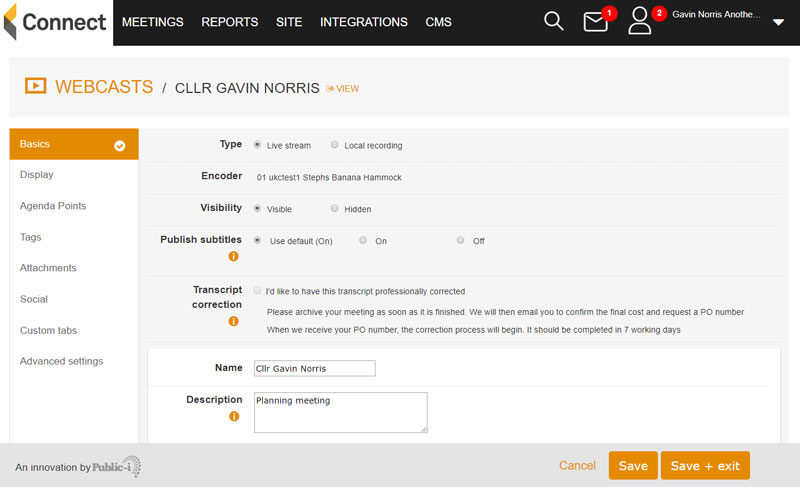
But now, with only six weeks left until the conference starts on the 26th June, we are putting the finishing touches to what we will be talking to delegates about – most importantly the launch of our new product, Connect Social, and the marketing activity around the re-branding of Public-i.
Connect Social is the culmination of a long and hard development process, in which our client base has had lots of input via our user group meetings. It includes lots of lovely new features and functionality (including around member profiles, which will be of great relevance to the LGA delegates). We’ll be telling you more about it soon, but as Catherine explained back in March, it includes more sophisticated interaction and user-management tools than the standard Connect platform and will offer more flexibility in terms of interactivity and social sharing.
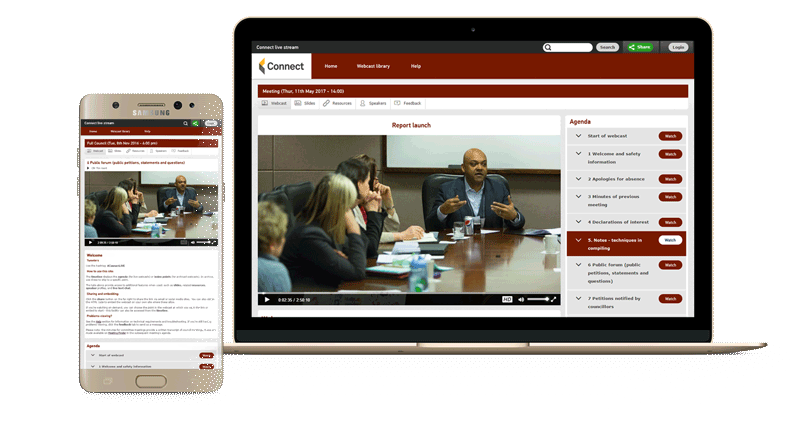
We recently adopted a responsive design (you can read a blog post from our Development Manager Ady Coles on this here) to our user interface and will be showing the results of this and the brand new design of our clients’ Connect sites on the stand.
As well as launching Connect Social and showing off the exciting new designs, LGA offers us the chance to meet old friends, network with others and start to build a pipeline for our products. It’s also a great opportunity to keep abreast of the latest innovation from other companies working within the public sector. This year I will have a delegate pass and so will be able to attend the plenary sessions and some of the workshops. Those that stand out for me are:-

  1. Leading Localism: the elected mayor’s view (Tuesday 26th) – It’s a very topical subject and something we discussed at our March user group, it will be interesting to hear the debate around the public response to the elections, but also plans for further decentralisation of power
  2. Civil Disturbances: 10 months on are we doing enough to prevent further disorder in the future? (Wednesday 27th) – The session will examine the recommendations made by the Communities and Victims Panel’s reports on the impact and reasons for the riots but I’m wondering if the session will go further by looking at the role of social media in the disturbances and also the collaborative approach councils and police forces took in managing the communication around them
  3. Self Improvement: More than an add-on (Thursday 28th) – I’m interested to learn more about how the sector can develop a culture of openness and transparency to the public and, as a provider of technological solutions to help our clients address exactly this problem, see whether we can help with any other innovations!
  4. The plenary session on Thursday, Preparing for Police and Crime Commissioners, is also a must. Having a number of police authorities as clients means we have been doing a lot of thinking about digital engagement for the new office (see here) as well as the impact this potentially powerful democratically elected post may have on the political landscape

We will be doing lots exciting things from the conference itself (blogging, tweeting etc) so watch this space and we look forward to seeing you at the conference soon.

Enhanced by Zemanta

Playing games with local participation

The term “gamification”, much like the term “social” is being thrown around in technology and business circles as the next frontier in web and mobile engagement.

World Of Warcraft

Flickr - World of Warcraft by juanpol

Gamification is most often defined as the use of gameplay mechanics for non-game applications and situations, It also suggests the process of using game thinking to solve problems and engage audiences.

Up to now the majority of mainstream uses and approaches of gamification have in my opinion mainly been driven by marketing people who have seen interesting opportunities to help increase sales and engage customers. There is nothing wrong with this, but there are even bigger opportunities where gamification principles could be applied to help renew local democracy and participation.

At City Camp Brighton this year Richard Vahrman suggested an idea called House of Games.

The internet has also enabled people to get directly involved in getting things done at a local level, rather than waiting for politicians to create policies to make things happen. There is now a wealth of web sites and apps enabling the public to tale part in everything from pot hole reporting to compost recycling. The one thing that hasn’t existed until now is the “glue” that joins all these great ideas together. Welcome to the House of Games.

It is a grassroots up approach that promotes and facilitates all the charitable and voluntary work that people are already doing on a local level, and rewards them for it.

When I think about this as a concept I tend to think of World of Warcraft the multiplayer online role-playing game – For those of you who don’t know much about World of Warcraft, let me briefly explain the link I’m making – Much of World of Warcraft play involves the completion of quests. These quests, also called “tasks” or “missions”, are usually available from non-player characters (NPCs) or other players. Quests usually reward the player with some combination of experience points, items, and in-game money. Quests allow characters to gain access to new skills and abilities, and explore new areas.

Quests are linked by a common theme, with each consecutive quest triggered by the completion of the previous, forming a quest chain. A quest chain is a group of quests that are completed in sequence. Completion of each quest is a prerequisite to beginning the next quest in the chain. Quests usually increase in difficulty as a player progresses through the chain.

In terms of the theory, this could adopted when solving local problems, we issue them as challenges (quests) and allow people to collaborate and come together to solve these problems and in doing so gain additional skills and experience.

Richard provides some examples of what neighbourhood quests could be :

  • Neighbourhood watch
  • Running a book club/extending library service
  • Helping solve the problems of digital exclusion (e.g. for the elderly)
  • Improving parks and green areas beaches
  • Working with local school
  • Using your professional knowledge in a local way
  • Compost recycling
  • Excess fruit and produce re-distribution

There are a number of interesting sites out there which currently promote the challenges and seek to encourage involvement and input from various people.

When I think about this idea in the context of what we at Public-i are working towards with Citizenscape and the welivehere projects – trying to connect local networks and provide mechanisms for local change and action – there is huge potential to align some thinking and work together on how this might happen.

Currently, when a user logs into the citizenscape platform you create a profile and as you interact with the content and widgets it displays your interaction within your profile. Now the question will be do we directly think about building the gamification idea into citizenscape, which would mean turning it into a social network in its own right which isn’t the best idea. Or and my current preference, is to provide integration to a separate site or service which manages the badges, points etc that a person might develop and gain. So it becomes a citizenscape user’s choice whether or not they wish to interact and display this kind of information on their profile.

It throws up some really interesting opportunities and some big challenges specifically around whether or not people would participate in such a process / approach.

The potential benefits are huge but it will be important to ensure that we fully understand and plan the approach collaboratively with some of the communities we are working with.

Right now we are exploring with Richard how we can align or even join up some thinking and projects in the area of Brunswick to test these ideas further and see if the welivehere project can be part of moving in this direction.

My honest opinion is that this may prove too much right now, but we may well start to build some of the basic processes and thinking in….


Enhanced by Zemanta

New chairman: Goodbye Roddy, hello Chris

Chris Lovell

A little while ago we welcomed Chris Lovell as our new chairman of the board – after saying goodbye to Roderick Corrie. Roddy’s departure gave us a moment to pause and reflect on just how far we’ve come in the 11 years he’s been with us. In that time we’ve gone from a handful of staff trying to prove webcasting was a good idea to the UK’s leading provider of the technology to the public sector.

It’s been quite a ride – and it felt entirely appropriate to give Roddy a decent send-off. In fact, it’s probably part of the reason why it’s taken us a while to get round to talking about it here.

Roddy’s critical, intelligent support for the company has helped turn a good idea into a thriving business; he’s a big part of the reason we’re doing so well. But things change: Roddy has new challenges to take on – as does Public-i.

And we know that Chris will challenge us – to make us think bigger and to start to consider the world outside of local government more. In fact, we’re quite sure that there is a great deal we can learn from him.

About Chris

Chris is now the owner and CEO of Golley Slater, which under his stewardship has grown to become one of the UK’s largest independent, privately owned marketing services networks, but he had a rather surprising start to his career.

After leaving school, he was the drummer for the band Jaguar, which in the late 70s and early 80s was part of the UK’s hugely popular heavy metal scene. Perhaps just as surprisingly, Chris says it offered him his first lessons in the importance of good organisation and management. “I could see that we were never going to make it big because we didn’t have the right management or infrastructure. We played with Def Leppard and I saw how they approached things and were really well managed,” he said.

The lessons were well learned. After stints at firms including McCann Erikson and Radio Rentals, he started his own business, building it into a successful marketing agency before selling up and later buying Golley Slater.

With such beginnings, it is perhaps not surprising that Chris’s interests are broad: he’s also a trustee at UNICEF and the owner of his own farm. He is even involved a company that runs the seed potato propagation for Walkers crisps. Sadly, he hasn’t yet brought any bags into the office. But we’re waiting!

Joining Public-i’s board

Having been introduced to Public-i some time ago by his good friend Roddy, Chris decided he’d like to get involved in the firm last year after meeting Catherine, our chief executive. He said: “I was then convinced this is something that could go places – it was the way in which she had put a plan together and I thought I could add to that by helping her thinking.”

Chris will be looking to offer his knowledge of sales and business development to Public-i at a time when we’re looking develop our market – with such marked changes to technology and to government.

In fact, some might call these exciting times for us, but Chris makes a good point to refute this: “I think that by definition being in a tech business you have to be in the game of where that tech is being used and is developing and adapting – so by definition it’s exciting times. It has to be exciting times – if it isn’t you have to worry!”

Building civil spaces online: Howard Rheingold

Howard Rheingold by Joi on Flickr - reproduced on a Creative Commons licence. Click the picture to see Joi's photostream

Last week I listened to a webinar interview with Howard Rheingold by the Pillar Summit’s Richard Millington.

If I was working for a newspaper I’d probably call Howard a web guru – or an elder statesman of the Internet, or hang my reverence on some other cliché. But, after listening to him speak for an hour about online communities and communication, it might be simpler and more revealing to say that he’s someone who understands life online, because he’s been living it for longer.

At a time when the world remained largely unaware of the Internet, Howard was already an avid user of the WELL – and in 1985 he wrote Virtual Communities, the book he’s perhaps best known for. He’s now promoting a new publication, Net Smart, that’s the continuation of a near-30-year exploration of how we live online.

Online living
Perhaps, then, it isn’t surprising that the first portion of the interview dealt with the value of online relationships, which have been under attack recently, in part thanks to Sherry Turkle’s opinion piece in the New York Times. The MIT-based psychologist fears that we’re overlooking ‘messy’ offline relationships in preference for an always-connected virtual world where we can pick and choose our encounters. This, Turkle believes, is to our detriment…

“Human relationships are rich; they’re messy and demanding. We have learned the habit of cleaning them up with technology. And the move from conversation to connection is part of this. But it’s a process in which we shortchange ourselves. Worse, it seems that over time we stop caring, we forget that there is a difference,” she says.

Rheingold, in contrast, is more worried that the media dwell on the negative aspects of technology, obscuring the overwhelmingly positive impact it has had on our lives. He stresses that he’s not a web evangelist, so much as someone who accepts the good and bad in online behaviour; technology, he says, doesn’t change behaviour, it facilitates it.

Where he is bullish, however, is in asserting that online relationships needn’t be of less value than those established ‘offline’. “If you think that using digital media are making you shallow why not learn to swim in the deep end of the pool?” he asks, pointing out that what might be missing in our understanding of these relationships is a recognition of the learning we need to do to operate effectively within them.

Civility
One example, he says, is in online behaviour: “We need to teach the importance of being civil online,” he argues. Where face-to-face communication is as much about the nuance of gestures and expressions as it is about the words that are used, most online communication is reliant on what is written down. Without making a more concerted effort to understand online communication – and allow for this – we will fail to make best use of these spaces in the future.

So how can we build civil online spaces? He says this is about signposting the kinds of behaviour that will be acceptable within an online space in order to attract users who will subscribe to these values. “You should have a few simple rules,” which might include: “Respect intellectual property” and “attack ideas, do not attack people”.

“Build it and they won’t come”
But Howard thinks getting people to play by the rules is less of a challenge than attracting them in the first place. He says that while it’s now easy to find people who share your interests online – they don’t necessarily need your community. You need to be original and have a clear idea of the people who are going to join and participate. And you can’t sit back and expect a community to flourish: “If you want to build a critical mass of participation you have to pay a lot of attention,” he says. “You have to participate.”

For Howard, attracting users is a numbers game – in which you can expect only a fraction of those to whom you promote your community to join. And getting them there is only half the battle. “It’s simply a ratio of 80-20,” he says. Most people (80%) will not take part, while the 20% who do will (or should) talk a lot. “You need to have people who are willing to engage. No conversation, no community,” he says.

The pay-off
And, of course, community is what it is all about. Returning to the subject of the benefits of life online, Howard talks about the ‘norms of reciprocity’, the expectation that people will respond in kind to offers of help or, indeed, harm.

He says: “If you put in effort – to put in something – you are going to get 10 things back [online]”. And has been astonished how this “pay it forward” philosophy has worked online – with people prepared to help folk that they have never met.

Howard says…
These are some of the other points that Howard made during the interview…

  • Most online communities fail: You need to identify what it is that people can get from each other that they are not going to get from their own blogs – ther is no guarantee that that is going to exist, he says.
  • With two billion people online, remember that one in a million is 2,000 people. In other words, with such large numbers of people online, even small niche communities can thrive.
  • Spending time online does not lead to social isolation. People who spend more time talking online to each also tend to spend more time talking to people face to face, Howard said.
  • Dunbar’s number doesn’t mean that online relationships have to be shallow: Howard talked about how social networking gives people the opportunity to develop ‘weak ties’ – and therefore suggested Dunbar’s number is therefore not hard and fast. Furthermore, he challenged the notion that this 150 limit applies naturally online.

We Live Here: What it’s all about

As some folk will know, we’re involved in an interesting project with Brighton and Hove City Council and The Democratic Society called ‘We Live Here‘.

Thanks to initial funding from Nesta’s Creative Councils, it is working with three communities in Brighton and Hove, looking at how community networks can be mapped and understood to help local government and its partners serve and support them.

We Live Here is now at an important stage – with initial research into those networks having been played back to people in the communities through a series of events. Public-i’s role is to provide the technology – in this case the Citizenscapes – to display the networks and  their activity online.

  • Hangleton and Knoll (a ward in the City’s outskirts that is one of the three communities chosen for We Live Here) had its event in March. See the Citizenscape here.
  • Brunswick (a ward close to the city centre in a conservation area) had its on Monday, 16th of April. See the Citizenscape here.
  • And the city’s Black and Minority Ethnic communities had its on meeting on Wednesday, 18th of April. See the Citizenscape here.

Now, with all this work bearing fruit, and with We Live Here beginning to feel very real, I thought I’d publish a short interview that I did with Anthony to help people to understand more about the thinking behind it.

What is We Live Here?

As Anthony explained, We Live Here is a response to a feeling shared by Anthony, Catherine and others that we need to make goverments fit better with the way the world is moving. He said government is lagging behind in the changes that are happening to society as a result of the internet and the networking that it is enabling. For government to respond it needs to refocus on the people it serves.

“People are getting much better service from Amazon than they are getting from governments and that’s not just because Amazon are cold, hard capitalists,” he said. “It’s because they have a vision of their customer service that’s very focused and government doesn’t have a vision of its services that’s citizen focused.”

Anthony said We Live Here is the start of a process to “both understand and map social networks in an area and provide the democratic infrastructure for them to have repetitive democratic conversations, rather than a one-off consultation”.

This Slideshare presentation is probably the best summary of this – and it’s funny, too.

The team, Public-i and the project

As I said earlier, we’re the project’s technology partner, which means we’re helping to take the ideas developed by the We Live Here team and make them (digitally) real. With our interest in how the social web can benefit democracy, we fit quite snuggly. As Anthony put it: “Public-i’s commercial activities around webcasting and social uses of technology and Demsoc’s philosophical activites around new models of government in personalised democracy are obviously quite well aligned, so when the opportunity to talk to the council about this came up, it wasn’t too long for us to put We Live Here on the table.”

We Live Here has also benefited from the talents of Paul Brewer and Nicky Cambridge who both work for Brighton and Hove City Council, as well as Emma Daniel at the Brighton and HoveCommunity and Voluntary Sector Forum (not to mention the enormous work done by Susie Latta, Demsoc’s tireless project manager). Working as a team, Anthony said We Live Here has gone from a set of aspirations and ideas into a practical, real project. That started by breaking down the project brief into several simple steps: connect, inform, discuss and decide.

It’s that connect phase that the We Live Here team has been busy with recently. This consists of finding out the valuable individuals, organisations and connections that are relied upon by people in each of the communities. “From the council’s perspective, they know about the residents’ associations in Brunswick, the Hangleton and Knoll Partnership and the Black and Minority Ethnic Community Partnership,” Anthony said. “We are asking people who are active in those networks, ‘Who else do you know?, ‘Who else do you trust?’, ‘Who else do you recommend as sources of information about the local area?’”

This physical work has been supplemented by online searches – carried out by Public-i and using our Social Media Audit methodology. At the same time, we’ve been working within communities, with the Social Media Surgeries helping voluntary, community and resident organisations to develop their own online presences.

What’s next?

By feeding back the results of the initial research to those living and working within the communities it will allow the We Live Here team to get a stronger idea of where there are strengths and weaknesses in communities lie and develop a working model of how they function. “The aim is then that we create a kernel of democratic process and a network-finding process that’s replicable elsewhere”, while also ensuring communities are given additional help in different ways where it’s needed. Long term, Anthony said he hopes it leads to a “community that’s more connected, that’s more self aware and has the tools to make it active, democratically.” That should, hopefully, mean that we’ll see communities getting powers, perhaps including community-budgeting powers and Brighton and Hove is planning a set of neighbourhood council pilots elsewhere in the city soon.

Here’s the MP3 of my chat with Anthony. It’s not that short, about 15 minutes’ worth!

We live here Anthony Zacharzewski

Enhanced by Zemanta

© 2012 Public-i Group Ltd. All Rights Reserved.

Blog powered by Wordpress and a Public-i version of the Magatheme theme.